

Our Goodyear welted outsole is part of traditional footwear construction that creates a durable shoe, which is easy to re-sole and built to last. Because this construction allows you to re-sole your shoes, it is a much more sustainable option. It keeps shoes out of landfills and cuts down on consumption, allowing you to hold on to your favorite pair for life.

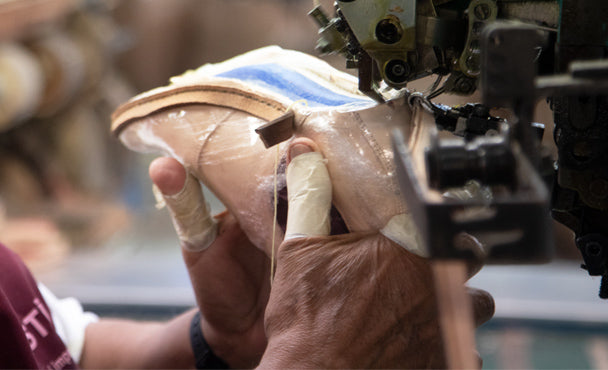
What is the Goodyear Welted Construction?
Invented by Charles Goodyear in 1869, this intricate process of footwear construction involves stitching a strip of leather, a welt, to unite the insole and upper of a shoe to its outsole. This technique remains the oldest and most durable method of shoe construction, and it produces footwear that becomes uniquely defined by your individual wear over time.
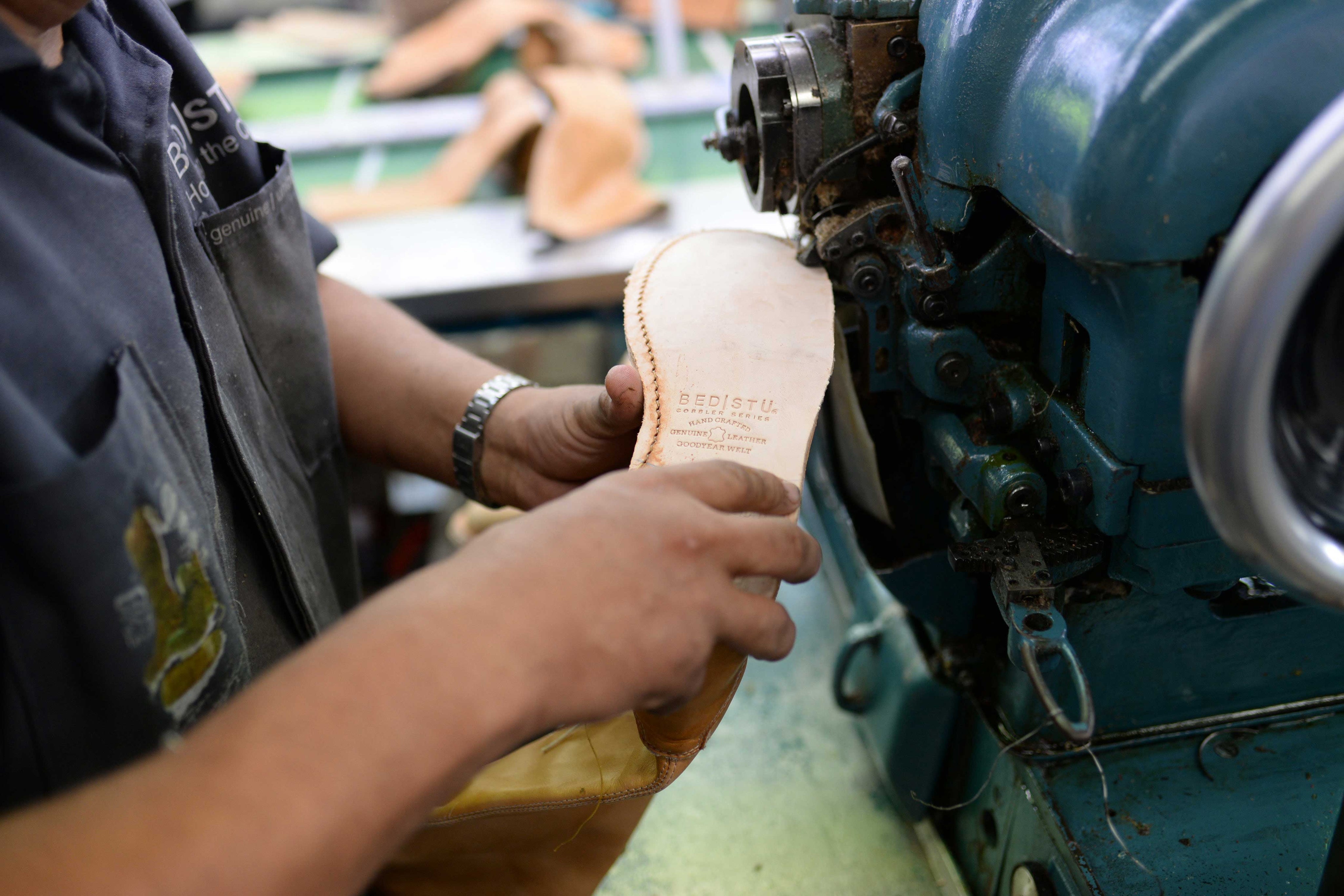
Long-Lasting Comfort
Since Goodyear welting does not involve cementing the shoe outsole to its upper with a traditional adhesive, it is more durable and promises a longer life, whereas cemented constructions may fall apart and wear down more quickly. It also allows the shoe to be taken apart and re-soled, increasing its lifespan.
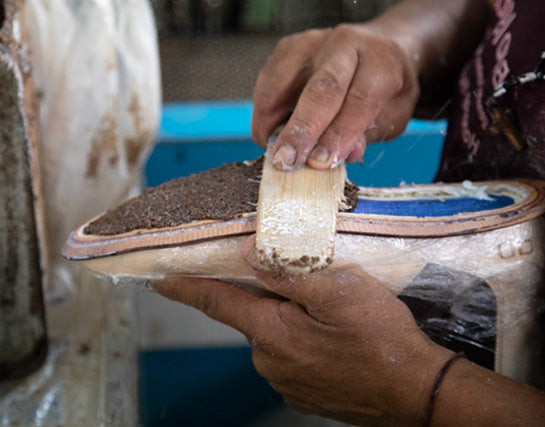
Custom Fit to You
A unique characteristic of the Goodyear welted construction is its cork midsole. Cork is naturally moisture-wicking and relatively odor-free. Furthermore, the elasticity of the cork mixture reduces stress on the joints and cradles the foot, which causes the shoe to mold to the wearer's foot over time, creating a truly customized footbed for a higher degree of comfort.